
Guide · Icod de los Vinos, Tenerife
North or south: where to stay in Tenerife
AEMET, Spain’s met office, describes two sides to Tenerife: the windward north, humid and cloudy, and the leeward south, dry and clear, where the airport averages 114 clear days a year. If you want golden-sand beaches, the south suits you better; if you prefer a volcanic coast with natural pools and historic towns, the AD Boutique Villas apartments in Icod de los Vinos are about 60 minutes by car from the south airport and 40 from Los Gigantes, according to OSRM.
Facts checked on 16 October 2026.
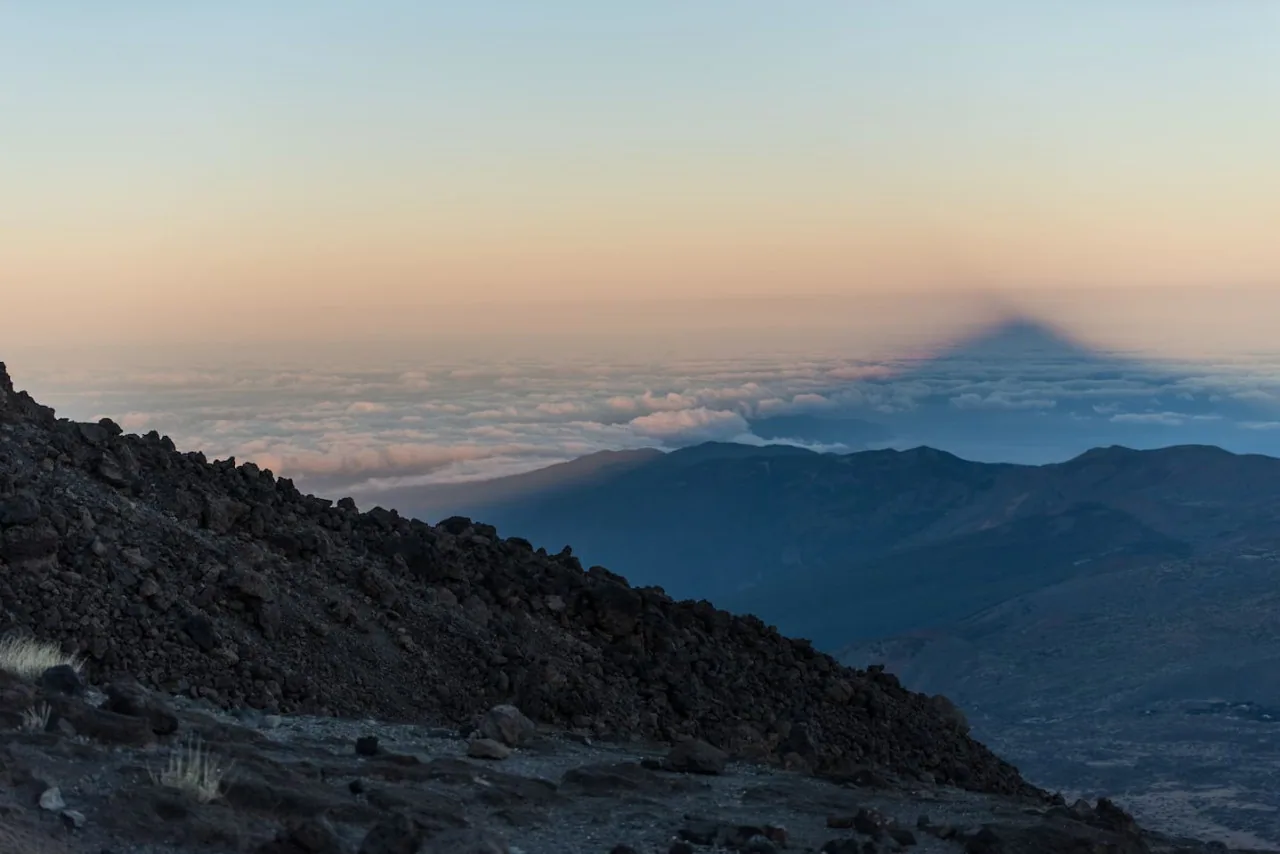
Two sides, two climates
AEMET describes two distinct sides of Tenerife: the north-facing, windward side, which is humid and cloudy, and the south-facing, leeward side, which is dry and clear. The island is pyramid-shaped, with a mountain ridge running from north-east to south-west. (Source: AEMET)
According to AEMET, the trade winds blow from the north-east and are especially persistent in summer. As this moist air rises up the northern slope, it condenses beneath the temperature inversion and forms the ‘sea of clouds’. (Source: AEMET)
What the climate normals say
| Station | Altitude | Average annual temperature | Rain a year | Clear days |
|---|---|---|---|---|
| Tenerife South Airport | 64 m | 21.4 °C | 132 mm | 114 |
| Tenerife North Airport (La Laguna) | 632 m | 16.8 °C | 520 mm | 44.1 |
The Tenerife North station is at 632 m above sea level in La Laguna: because of its altitude, it does not represent the climate of the north coast. (Sources: AEMET · Valores normales 1981-2010, Tenerife Sur · AEMET · Valores normales 1981-2010, Tenerife Norte)
Beaches: golden sand in the south, volcanic rock in the north
Tenerife’s tourist board describes the northern beaches as ‘wilder’, all of black sand or volcanic rock, and the southern ones as fine golden sand, in places such as Los Cristianos, Playa de las Américas and Costa Adeje. (Source: Turismo de Tenerife)
The north coast also has natural lava pools, such as El Caletón in Garachico, which Tenerife’s tourist board recommends for swimming when the sea is calm. (Source: Turismo de Tenerife (EN))
Next to the apartments, San Marcos bay has had closures and damage in 2025 and 2026; we set it out, with sources, in the things-to-do guide.
What is close to Icod de los Vinos
- The Drago Milenario, a National Monument since 1917, in the Parque del Drago next to Icod’s historic centre, a Site of Cultural Interest. (Sources: Turismo de Tenerife · Turismo de Tenerife (EN))
- The Cueva del Viento, a lava tube with 18 km mapped, which can only be visited on a booked guided tour. (Sources: Cueva del Viento · web oficial · Cueva del Viento · La visita)
- Garachico, with its historic centre, listed since 1994, and the El Caletón natural pools. (Sources: Wikipedia · Turismo de Tenerife (EN))
- La Orotava, whose historic centre was declared a historic-artistic ensemble in 1976. (Source: Wikipedia)
All of it, with sources and driving times, in Things to do in and around Icod de los Vinos.
Which side suits whom
If you want a golden-sand beach and as many clear days as possible, the south suits you better. If you would rather swim in natural pools when the sea is calm, walk around historic town centres and have the Drago and the Cueva del Viento a few minutes away, the coast around Icod de los Vinos is the better fit.
Without a car, there are direct buses from Icod de los Vinos to the south every day: route 464 reaches Costa Adeje bus station in 1 h 15 min. (Source: TITSA)
At AD Boutique Villas, four of the seven apartments have a private pool, heated to 28 °C. (Source: AD Boutique Villas)
Driving times from the apartments
| Destination | Distance | By car |
|---|---|---|
| Tenerife South Airport (TFS) | 67 km | ≈ 60 min |
| Los Gigantes (harbour) | 36 km | ≈ 40 min |
| Teide cable car | 60 km | ≈ 65 min |
| Puerto de la Cruz (Lago Martiánez) | 26 km | ≈ 30 min |
| Tenerife North Airport (TFN) | 46 km | ≈ 45 min |
| Garachico | 7 km | ≈ 10 min |
| Icod old town | — | 3 min |
| San Marcos bay | — | 3 min |
Road distances and approximate times, calculated with OSRM (OpenStreetMap) on 16 October 2026, without traffic and rounded to five minutes; each distance links to its calculation. On mountain roads such as the TF-436 to Masca or the TF-21 to the Teide it tends to underestimate. The three minutes to Icod’s old town and San Marcos bay are AD Boutique Villas’ own figure.
Frequently asked questions
Does it rain more in the north of Tenerife than in the south?
According to AEMET’s climate normals (1981–2010), Tenerife North Airport, at 632 m, gets 520 mm of rain a year, and Tenerife South Airport, at 64 m, 132 mm. Because of its altitude, the Tenerife North station does not represent the climate of the coast.
Why is there more cloud in the north of Tenerife?
According to AEMET, the trade winds blow from the north-east, especially in summer; as this moist air rises up the northern slope, it condenses beneath the temperature inversion and forms the sea of clouds. That is why AEMET describes the north side as humid and cloudy and the south side as dry and clear.
Are there sandy beaches on the north coast?
Tenerife’s tourist board describes the northern beaches as ‘wilder’, of black sand or volcanic rock; fine golden sand is in the south, in places such as Los Cristianos, Playa de las Américas and Costa Adeje. The north coast also has natural lava pools, such as El Caletón in Garachico, for swimming when the sea is calm.
How far is Icod de los Vinos from the south of the island?
From the AD Boutique Villas apartments in Icod de los Vinos, OSRM calculates about 67 km and 60 minutes by car to Tenerife South Airport and about 36 km and 40 minutes to Los Gigantes, without traffic. By bus, route 464 runs direct from Icod to Costa Adeje bus station in 1 h 15 min every day.
Where are there more clear days, in the north or the south?
In the south. According to AEMET’s climate normals (1981–2010), Tenerife South Airport averages 114 clear days a year, and Tenerife North Airport, at 632 m, 44.1.
Where to stay: AD Boutique Villas
Seven apartments in two villas on the same hillside above San Marcos, in Icod de los Vinos, Tenerife: 28 guests in total, each apartment with its own entrance and its own garden or terrace, and four with a private pool heated to 28 °C. Rent one, or the whole estate for a single group.
- Apartment H · The view upstairs, the pool belowsleeps 4 · private pool · from €158 a night
- Apartment A · A lava garden above the seasleeps 4 · private plunge pool · from €160 a night
- Apartment C · An outdoor kitchen facing the sunsetsleeps 4 · private pool · from €150 a night
Sources
- AEMET · Aviador 102, Guías AEMET (PDF)
- AEMET · Valores normales 1981-2010, Tenerife Sur
- AEMET · Valores normales 1981-2010, Tenerife Norte
- Turismo de Tenerife · blog, 04-2022
- Turismo de Tenerife (EN) · Garachico
- Turismo de Tenerife · Parque del Drago
- Turismo de Tenerife (EN) · Centro histórico de Icod de los Vinos
- Cueva del Viento · web oficial
- Cueva del Viento · La visita
- Wikipedia · Garachico
- Wikipedia · La Orotava
- TITSA · 464
Anything not taken from a source on this list comes from AD Boutique Villas’ own data. Driving distances are from OSRM (router.project-osrm.org), except the three minutes to Icod’s old town and San Marcos bay, which are our own.